Wisconsin Yard Sign Rules
A yard sign is the cheapest way to get your name in front of a lot of voters, and it's easy to put one in the wrong place. A sign in the wrong spot gets pulled, and a sign that's too small to read does nothing at all.
 Tony Ruffi10 min read
 Add as a preferred source on Google
By the end of this article, you'll know where Wisconsin lets campaign signs go, how big they can be, and what to skip. You'll also get our rules for making a sign people can read from a moving car.
Where to look
Where can a campaign put yard signs in Wisconsin?
On homes, mostly. State law lets anyone put a political sign on a home they own or rent during the campaign period. It also limits what a city or village can say about it. Public land, road edges and the area near the polls on election day are where signs get pulled and trouble starts.
- 11 square feet:the size where a city or village may start to set its own limits
- 100 feet:how far from a polling place door campaigning must stay on public property on election day
- December 1, 2026:when the campaign period starts for the April 2027 election
- 3 square feet:the size of a common 18 by 24 inch yard sign, far below the 11 square foot line
- 0 campaign signsmay sit inside the limits of a street or highway, since only traffic signs are allowed there
- 1 phone callto your clerk clears up anything your town does differently
The campaign period is a term in the law. It starts on the first day candidates can circulate nomination papers, which are the forms voters sign to put you on the ballot, and ends on election day. The rules for homes come from Wis. Stat. § 12.04, the part of the state's written laws (its statutes) on political messages.
Can a city or village tell you how big your sign can be?
Mostly no, with two limits. A city or village can't control the size, shape, spot or message of a political sign on a home. It can step in for traffic or walking safety, and a city or village can set limits on any sign over 11 square feet.
Here's what common sizes look like, so you can see where that line falls:
| Sign size | Square feet | Where it sits |
|---|---|---|
| 18 by 24 inches | 3 | Well under the 11 foot line |
| 24 by 36 inches | 6 | Under the line |
| 3 by 4 feet | 12 | Over the line, so your city may have a say |
| 4 by 8 feet | 32 | Over the line, and a likely call to the clerk |
The size math is ours, not the law's. It's just length times width. A sign with a light, motor or sound part is a separate case, because a city can regulate those too. If you plan anything that big or fancy, call your clerk before you order.
The same section also leaves out signs that fall under the state's billboard rules, which are in a different law (s. 84.30). Those cover large outdoor advertising along some highways, and a yard sign isn't one of them.
What about renters, farms and stores?
Renters can do what owners do, in the part of the property they rent and use alone. The lease decides what counts as theirs, so read it first. The law above is about homes. For a store, a farm field or a parking lot, the owner has to say yes, and you should ask your clerk if anything else applies.
For a shared lawn in an apartment building, the owner of the building decides. That means the best place for a sign is often a front yard where the person who lives there asked for it.
Get the OK in writing when you can. A text message counts, and it saves an argument when someone complains. Then put the address on your list so you can find the sign again.
Why can't you put signs on the grass by the road?
Because the strip beside a road is often public land. State law says no sign may be placed inside the limits of a street or highway unless it's needed to guide or warn traffic. It also tells road crews to take the rest down. A sign there can vanish, and your money goes with it.
That's in Wis. Stat. § 86.19. The hard part is that the line between a yard and the road edge isn't always clear. Many yards have a strip of grass out front that belongs to the town or the state, and a sign there may count as inside the road limits. If you're not sure, ask the property owner where their line is, or ask your clerk or road department.
A good rule of thumb: put the sign back from the road, closer to the house than the street, with the owner's say-so.
How close to the polls can a sign be on election day?
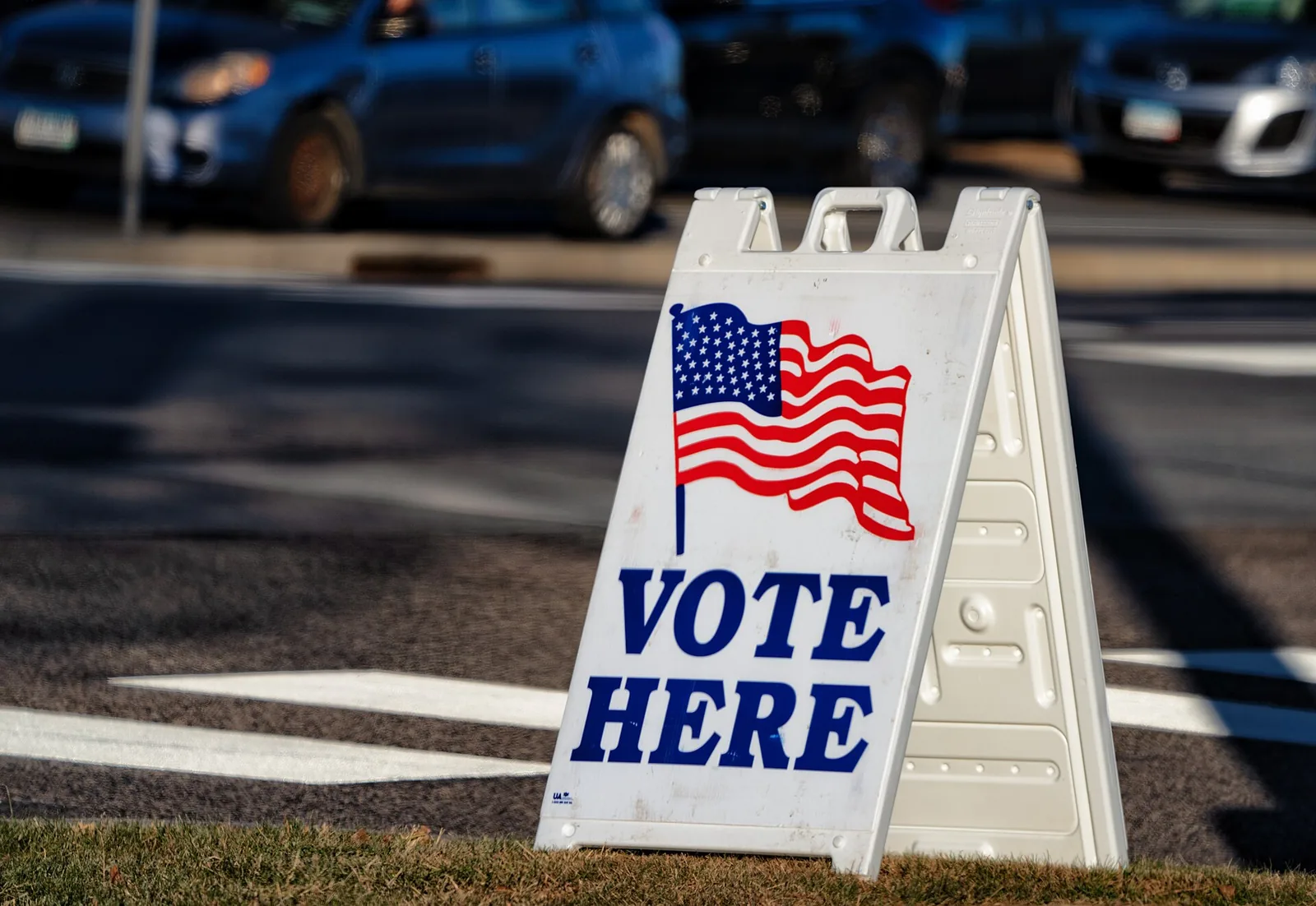
Public property within 100 feet of a door to a building with a polling place is off limits for campaigning during polling hours. That covers signs. A clerk, election inspector or police officer can take down any that break the rule. The same goes for the clerk's office when people can cast absentee ballots there.
The rule is in Wis. Stat. § 12.03. Electioneering, the word the law uses, means any activity meant to sway how people vote. That includes a sign, a button and a conversation.
On the day before, drive past each polling place for your race and look at where your signs are. If one is close to a door, move it. Nobody wants a sign pulled on the one day it matters most.
What makes a sign work from a moving car?
A short name in big letters, one color against another color that stands out, and nothing else. Drivers glance at a sign for a moment as they pass. We tell every candidate the same thing: you have about three seconds, from the moment a person first sees your sign to the moment they've passed it. If they can't read it in that time, they didn't see it. Here's the list we use before anything goes to print:
- Your name is the biggest thing on the sign. It should be readable from across a street.
- Use two strong colors, like dark blue on white, so it stands out from the grass and leaves.
- Put the office on it, in plain words, like "for School Board." Voters need to know what you're running for.
- Skip slogans longer than a few words, and skip small print except the required line.
- Match your mailers and website. The sign, the mailer and the website should look like the same person, so each one reminds voters of the others.
- Add the "Paid for by" line in the right words and size. Our article on Wisconsin paid for by rules shows how.
It's tempting to make a sign look really cool and fill it with words. People won't read them. Your sign is also the first time many voters meet you, and they'll start seeing it all over town.
The colors you pick for your sign will most likely be your colors for the rest of the race, on your website, your mailers and your ads. So choose a set that fits you and that you can live with. You don't have to use the colors people expect for your party. Voters may guess things about you from your colors, so pick ones that say what you want them to say.
If you may run for a higher office someday, plan for that now. Say you win a seat on the city council and later run for State Assembly or State Senate. Your words on the sign will change and you'll order new signs, but keep the same colors, font and style. Voters who already know your name will spot you right away, and they won't wonder if it's the same person they voted for. Those voters will also tell their friends, and a good word from a neighbor is worth a lot in a campaign.
Who should get your signs, and where?
Start with the busiest spots, then fill in from there. Most campaigns need more signs than they think, so don't stop at a handful. How many you need depends on how close your race is. A neighbor who offers a yard is worth more than a yard you had to talk into. A sign in front of someone's home says "someone I know backs this person."
Keep a list. Write down the address, who said yes, the date, and when you checked on it. Signs get knocked over, moved and stolen, and a list tells you which ones to fix.
Here's a plan we give candidates:
- Add a yard sign request form to your website. Share the link in your emails and on Facebook. When someone fills it out, you or a volunteer can run a sign over to their yard.
- Ask supporters first. Every person at the door who says "I'm with you" gets asked.
- Pick the slow spots. Corners with a stop sign, a school drop-off line and the road into town are where cars slow down and people look.
- Put signs up in clusters, not one here and one there. A group of signs in a neighborhood looks like a movement.
- Check every week. Straighten the leaning ones and replace the missing ones.
Why does this matter for a small race? Because small races are close. One client of ours won a village president race by 18 votes, and in a race like that, the people who saw your name often enough to remember it count. A sign is one of the ways they see it.
What do campaigns get wrong with signs?
Mostly they order too many too soon, put them in the wrong spots, and never check on them. They also pack too much on the sign, or forget the "Paid for by" line. Here's what we see again and again:
- Signs on the road edge. They look like a smart spot and then get pulled. Stay on private property with permission.
- Too much text. A web address, a slogan, three issues and a photo means voters read none of it.
- No plan for the day after. Take signs down after the election. Some towns have their own cleanup rules, so ask the clerk.
- No line at the bottom. A missing "Paid for by" can't be fixed after the signs are printed.
- Ordering before the design is done. Check the spelling of your name twice. Then have two other people check it.
Here's how it can go wrong even when you follow the rules. One of our candidates put yard signs up in a village, in spots that were allowed. Then the city works crew, the people who run the trucks and do the upkeep around town, came through and picked up every sign and took them to storage. The village was much stricter than the towns around it, and the crew didn't know its own rules for where political signs can go. We had to call and sort it out.
What fixed it was getting the clerk's OK and the OK of the people at city hall, so everyone read the rules the same way. It also helped that we were kind to the works crew. They stayed open 15 extra minutes so we could pick up the signs, and we got them back in time for the election. If we hadn't worked with everyone in the chain, not just the clerk, we might not have. Before you put up a single sign, ask the clerk, and be friendly with the crew that handles the roads.
Jacobson's race shows why the basics matter. In 2024 Brent Jacobson won a State Assembly seat with 66% in a district that was brand new, so most voters had no habit of knowing his name. Every sign, mailer and online post had to do the job of introducing him. You can read how that race came together in our Jacobson case study.
Before you place the order
Run this list once, out loud, before you pay a printer. If you can answer all six, you're set.
- Can someone read your name from 50 feet away?
- Does the sign say what office you want?
- Is the "Paid for by" line there, in the right words and size?
- Does every spot on your list have the owner's OK?
- Have you checked with your clerk about size and timing in your town?
- Do you know where each polling place is, and who will check your signs that week?
This article is general information, not legal advice. Laws and city rules change, and some towns add their own rules for timing or cleanup. Confirm the requirements for your race with the Wisconsin Elections Commission and your filing officer, usually your clerk.
Want a second set of eyes on your sign design and your plan before you print? Our consulting team works with candidates at every level, from school board to Congress & governor, and the first conversation is free. You can also read our campaign website checklist and our article on beating an incumbent.
Sign questions we hear
When can I put up campaign signs in Wisconsin?
State law covers the campaign period, which starts on the first day nomination papers can be circulated and ends on election day. For the April 2027 election that start date is December 1, 2026. Ask your clerk if your city has any rule about signs before that date.
Can my city or village ban yard signs?
Not on a home. State law says a county or city can't control the size, shape, spot or message of a political sign on residential property, with a few safety exceptions. A city can limit signs over 11 square feet. Check with your clerk for the rules in your town.
Can I put a sign on a rented home?
Yes, in the part of the property that you rent and use alone, the same as an owner can. Your lease can change what counts as your space, so read it first. For a shared lawn or hallway, the owner decides. Get the owner's OK in writing if you can.
Can I put signs on the grass next to the road?
Usually no. State law bars signs inside the limits of a street or highway, except traffic signs, and tells road crews to remove them. That strip is often public land even if it looks like someone's lawn. Ask your clerk or road department where the line is.
How close to a polling place can a sign be?
On election day, nobody may campaign on public property within 100 feet of a door of a building with a polling place while the polls are open. A clerk, election inspector or police officer can remove signs that break this rule. Ask your clerk exactly where the line is.
Does my sign need a Paid for by line?
Usually yes. A sign that urges people to vote for or against a candidate and was paid for by a campaign has to show who paid. We cover the words and size in our article on Wisconsin paid for by rules. Confirm the details with the Wisconsin Ethics Commission.
Can Bluejack help with campaign signs?
Yes. We work with candidates at every level, from school board to Congress & governor, on logos, sign design and a plan for where signs go. Reach out for a free consultation and we'll talk through your race.
Fact-checked October 3, 2026 against Wis. Stat. §§ 12.03, 12.04 and 86.19 on the Wisconsin Legislature website.
- Wis. Stat. § 12.04, Communication of political messages, Wisconsin Legislature accessed Oct 3, 2026
- Wis. Stat. § 12.03, Campaigning restricted, Wisconsin Legislature accessed Oct 3, 2026
- Wis. Stat. § 86.19, Highway signs, regulation, prohibition, Wisconsin Legislature accessed Oct 3, 2026
- Local Candidates, Wisconsin Elections Commission accessed Oct 3, 2026